

Has a limited-time offer ever prompted you to make a purchase as quickly as possible? Have you ever had the urge to partake in a trend simply because everyone else was doing it? That sensation is an example of FOMO (fear of missing out).
Because FOMO is such a powerful emotion, it is often used by marketers to propel consumers into making rushed purchasing decisions, particularly if they feel as though they are about to lose an excellent opportunity to buy a product or subscribe to a service.
Today’s marketers are experts in using FOMO to motivate prospective consumers to quickly make purchases, register for services, and attend a brand without putting in any considerable thought beforehand.
This blog post will take a closer look at FOMO: its definitions and implications for your purchasing experience as well as how marketers leverage FOMO to drive up their sales. We will also highlight several examples of FOMO tactics that you may have experienced in the past (without realizing it).
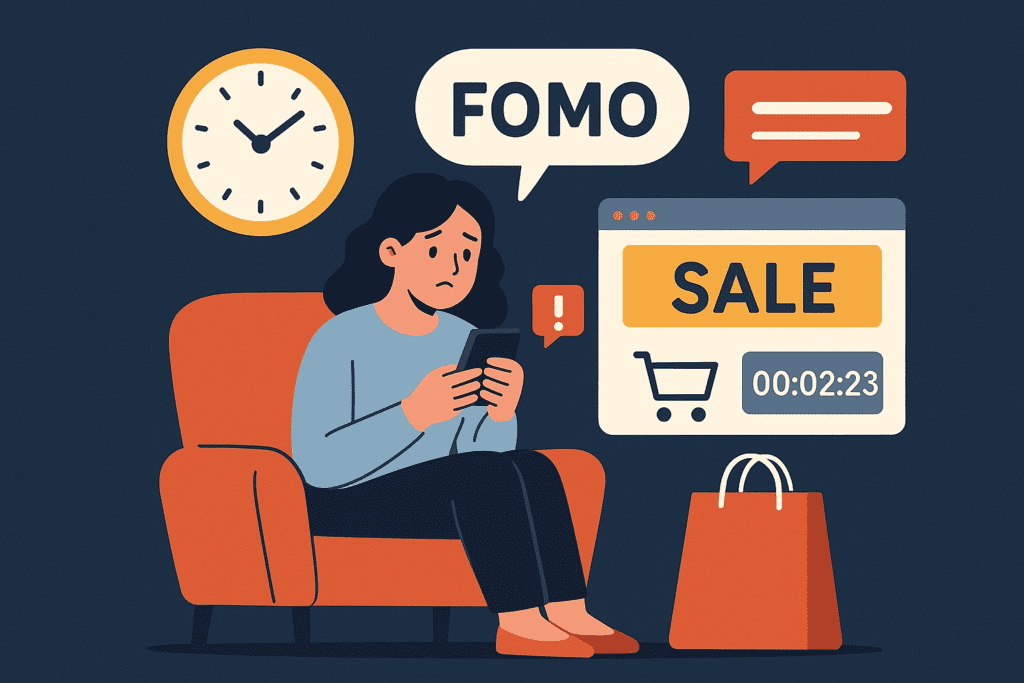
What is FOMO?
FOMO is a common psychological phenomenon that plays a large part in people’s lives today. FOMO occurs when individuals feel a fear of missing out on an event (experience, holiday, etc.), valuable opportunity (money, job, etc.), or experience with friends and family members or having been in a group publicly experiencing something.
People often have anxiety about not being able to take advantage of the opportunity and try to avoid that anxiety by acting quickly (purchasing products, attending events).
In simple terms: FOMO is the desire that prompts us to take action
With the internet, social media (Facebook, Instagram, etc.), and e-commerce (Amazon, eBay, etc.), FOMO has been amplified; seeing people post pictures on the internet about where they’ve travelled, new electronics, new clothes, and what’s currently popular, makes it harder for people to wanting to be left out when they see others having a great time enjoying something.
Why does FOMO work? The psychology behind it
1.We dislike losing more than we enjoy winning
This is defined in the psychological field as loss aversion.When we perceive a significant possible loss of a value or resource, we instinctively react to it with haste.
For instance,
‘There is only one left in stock!’
This promotes our perception of rarity and thus value; Likewise our buying behavior becomes inclined toward quick purchases.
2. We tend to follow others
Humans typically trust what they observe in an environment; one way this happens is that the popularity of a product leads us to naturally assume it is a good product. For example,
‘Today thousands of customers bought this!’
We feel safe to purchase when we see this figure.
3. We want to belong
People naturally do not want to feel excluded. When we observe others gain advantages through certain products, we automatically want the same for ourselves. For example,
‘Your friends are utilizing this application now!’
This challenges our rational minds and stimulates instinctual fear that we may be left out.
What is FOMO Marketing?
Marketers know how we operate, and they create marketing messages that make us feel as if we need to act quickly. Following are some of the ways they create a sense of urgency through FOMO marketing techniques, which we see in many advertisements, on websites, and on social media.
1. Limited-Time Offers.
When a product is available for a Limited Time, we become extremely Urgent to purchase it.
Examples of Limited-Time Offers are:
– “Sale Ends Tonight!”
– “Only Available for 24 Hours!”
– “Final Call!”
When there’s a sense of urgency, we stop thinking and begin purchasing products to take advantage of the Limited-Time Offer.
2. Limited Stock or Scarcity.
When an item has Limited Availability, we see it as Special and Rare.
Examples of Limited Stock or Scarcity include:
– “Only 3 Seats Left on This Flight”
– “Selling Out Fast!”
Even regular, everyday products become valuable through Scarcity Marketing.
3. Social Proof.
When a Company can show us that Many People Love or Enjoy Something, we tend to Trust and Attract that Company.
Examples of Social Proof Marketing include Ratings and Reviews, a “Bestseller” Tag and “People Like You Bought This.”
If many people have an interest in something, we think, “If Everyone Wants It, I Should Too.”
4. Real-Time Activity Notifications.
E-Commerce Websites Inform Us of What Others are Doing in Real-Time, Providing Us with Competitive Feels.
Examples of Real-Time Activity Notifications include:
– “Anita from Kochi Just Booked This Hotel!”
– “5 People Are Viewing This Product Right Now!”
Real-time activity notifications create a sense of competition.
5️. Exclusive access
People often feel good about being recognized as special or being part of a select group.
Examples include:
-Early access for members
-Sign up for our VIP list
– Limited to the first 100 sign-ups
-The principle of exclusivity increases the desire for a product.
6️. Flash Sales & Countdown Timers
Creating urgency encourages people to buy items on impulse.
Examples include:
-Offer expires at 2:59:58
-Flash sales on Flipkart and Amazon
-The countdown prevents customers from procrastinating their purchase.
7️. Product Bundling & Bonus Gifts
Customers feel as though they are receiving bigger deals when they can take advantage of bonus offers or special limited time gifts.
Example:
-Buy 1 Get 1 Free – Today Only!,
Consumers do not want to miss out on the bonus offer
Why do businesses love FOMO marketing?
Because it brings results quickly:
- Higher sales conversions
- Faster customer decisions
- Increased website engagement
- More product popularity and brand buzz
FOMO turns a “Maybe later” into a “Buy now” — and that’s what every business wants.
Final Thoughts
FOMO can be used by marketers to fool their audience into making a quick purchase. Customers are continuously reminded of this by the many times they’re offered something for a limited time only or because there is only one item left.
FOMO works because we don’t like to miss out on enjoyable experiences and we want to share those experiences with others. Customers will experience the excitement of dealing with a reputable business and in return, a reputable business will grow its revenue.
Would you like to learn more about effective marketing practices such as FOMO and develop a career in digital marketing? Sign up for our expert-led digital marketing class today to kick off your career path!